
- All
- Product Name
- Product Keyword
- Product Model
- Product Summary
- Product Description
- Multi Field Search
 English
 Views: 0 Author: Site Editor Publish Time: 2026-02-11 Origin: Site
Why do fabric defects appear after cutting begins? Many problems start earlier than expected. This article explains what the fabric inspection process is and how a Fabric Inspection Machine checks fabric step by step to support accurate quality decisions.
Before any fabric moves forward, the preparation stage starts with proper setup of the Fabric Inspection Machine. At this point, operators focus on stability, alignment, and calibration rather than speed. The machine must run smoothly so the fabric surface stays flat and visible during inspection.
During calibration, the goal is to match the machine settings to the fabric type being inspected. Light woven fabrics, heavier grey fabrics, and finished materials behave differently when moving across the inspection table. If tension is too high, the fabric may stretch. If it is too low, wrinkles appear and defects become harder to see.
Setup Item | Purpose in the Inspection Process |
Tension control | Keeps fabric flat without stretching |
Speed setting | Balances inspection accuracy and efficiency |
Measuring system | Supports length and roll consistency checks |
Lighting alignment | Improves defect visibility on the fabric surface |
Once the Fabric Inspection Machine is ready, the next step focuses on preparing fabric rolls and defining how the inspection process will be carried out. Fabric rolls must be mounted securely so they unwind evenly. Poor roll placement can cause edge curl, misalignment, or sudden stops, which disrupt the inspection process and affect accuracy. This stage may look simple, but it directly impacts how reliable the inspection results will be later.
Defining inspection parameters is equally important. Before inspection begins, we decide what defects matter, how they are classified, and how results are recorded.
Common preparation actions include:
● Checking roll labels, batch numbers, and fabric direction
● Confirming fabric width and expected length before inspection starts
● Setting defect classification rules based on internal quality standards
● Deciding how defects will be marked or logged during inspection
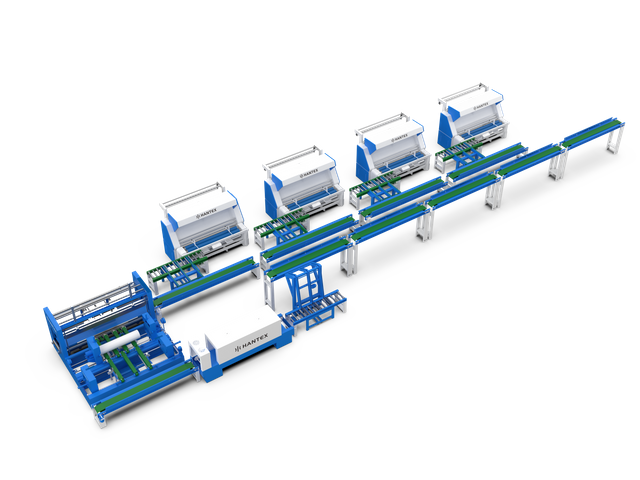
The visual inspection process begins when fabric enters the inspection zone of the Fabric Inspection Machine. At this stage, the goal is to create stable, uninterrupted fabric movement so the surface remains fully visible. We load fabric rolls carefully and guide them into the machine so they unwind evenly, without sudden tension changes or edge curl. Machines designed by Hantex Machinery support this step through stable frames and smooth feeding paths, which helps the inspection process stay controlled instead of reactive.
During feeding, operators focus on fabric behavior rather than defects. If the fabric twists, overlaps, or drifts sideways, visual inspection becomes unreliable.
Key feeding considerations include:
● Keeping fabric centered as it enters the inspection table
● Preventing sudden stops that interrupt surface visibility
● Maintaining even tension from the unwind section to the viewing area
Once the fabric is moving smoothly, continuous surface observation becomes the core of the visual inspection process. The Fabric Inspection Machine allows fabric to pass across a flat or slightly inclined inspection area where operators can observe texture, color, and surface consistency in real time. Instead of checking fabric in static sections, they watch it move, which reveals defects that only appear under motion.
Typical focus points during observation include:
● Surface uniformity across the full fabric width
● Pattern consistency as the fabric advances
● Sudden visual changes that suggest hidden defects
As the fabric moves forward, inspectors identify visible defects in real time and react immediately. This step transforms observation into action. When a defect appears, the Fabric Inspection Machine allows operators to slow down, pause, or mark the fabric without disrupting the entire process.
Defects are not judged in isolation. Inspectors consider size, frequency, and position along the roll. A small defect near the edge may be acceptable, while repeated defects in the center raise concerns.
Defect Category | How It Appears During Inspection | Process Impact |
Surface damage | Holes, tears, yarn breaks | May trigger roll rejection |
Contamination | Stains, oil marks | Often marked for grading |
Structure issues | Uneven weave, distortion | Affects downstream cutting |
Inspection speed directly affects what inspectors can see. During this stage, operators adjust speed and flow on the Fabric Inspection Machine to match fabric type and defect density. Faster speeds work for uniform fabric, while slower speeds are necessary when defects appear frequently. This adjustment keeps the inspection process flexible instead of rigid.
Speed and flow adjustments usually involve:
● Slowing movement when defects appear close together
● Increasing speed when fabric quality remains consistent
● Maintaining a pace that supports both accuracy and throughput
Once visual inspection is underway, measurement becomes a parallel process rather than a separate step. The Fabric Inspection Machine continuously tracks fabric length as it moves, allowing us to compare actual output against expected roll data. Width measurement happens at the same time, helping detect edge loss or uneven fabric spread early. This matters because small width deviations can create waste later during cutting, even if the fabric surface looks fine.
Measurement during inspection typically focuses on:
● Tracking total inspected length in real time
● Verifying usable width across the roll, not just at the start
● Detecting sudden width changes caused by tension or fabric damage
Alignment control is a key part of the measurement process. Even when length and width appear correct, skewed or biased fabric can cause serious problems downstream. As fabric moves across the Fabric Inspection Machine, operators watch how it tracks along the center line. If one edge advances faster than the other, skew becomes visible through drifting patterns or angled movement.
Alignment checks during inspection usually include:
● Watching edge movement relative to machine guides
● Comparing pattern lines against straight reference points
● Noting repeated bias behavior across multiple rolls
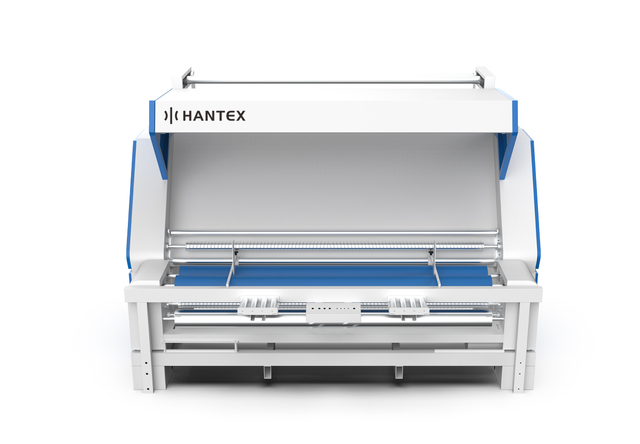
Dimensional consistency ties all measurement data together. Instead of trusting a single reading, the Fabric Inspection Machine helps confirm stability from the beginning of the roll to the end. We pay attention to whether width slowly narrows, length counters drift, or alignment changes after several meters. These gradual shifts often signal deeper fabric quality issues.
Consistency checks are especially important when fabric will be used for large panels or long cutting runs. A roll may meet specifications at the start but fail later.
Key consistency indicators include:
● Stable width readings across the entire roll
● No progressive skew as inspection continues
● Measurement values matching expected tolerances from start to finish
The measurement process ensures the fabric inspection process is not just about spotting defects but about confirming usable dimensions. Using a Fabric Inspection Machine keeps these checks continuous, structured, and tied directly to production decisions.
Once fabric moves steadily across the Fabric Inspection Machine, defect identification becomes a structured process rather than a subjective judgment. We define defects based on how they affect usability, appearance, and downstream cutting. Instead of reacting emotionally to every flaw, inspectors rely on predefined categories to stay consistent. This approach reduces disagreement between shifts and keeps inspection results usable for production planning.
In daily inspection work, defects are usually grouped by visibility, size, and impact. Small edge issues are treated differently from center defects, and repeated flaws carry more weight than isolated ones.
Defect Type | Typical Appearance During Inspection | Process Impact |
Surface defects | Holes, stains, oil marks | May reduce usable area |
Structural defects | Broken yarns, weave gaps | Often affect roll grading |
Pattern defects | Misalignment, distortion | Impacts cutting accuracy |
After a defect is identified, its location must be marked clearly while fabric continues moving. This step connects visual inspection to later decision-making. Using the Fabric Inspection Machine, operators can pause briefly, slow down, or mark the fabric edge without damaging the material. Clear marking prevents confusion when fabric reaches cutting or packing stages.
Marking is not random. We note where the defect appears along the length and whether it repeats. Location matters because defects near the center usually affect more panels than edge defects.
Recording defect data turns inspection into usable information. Instead of relying on memory, we log defect type, position, and frequency as the fabric passes through the Fabric Inspection Machine. This data becomes part of the roll record and supports later review. It also helps compare quality across batches instead of judging each roll in isolation.
Recording usually happens in real time. Operators enter data as defects appear, keeping the process efficient. When inspection data stays accurate, it reduces arguments later and speeds up acceptance decisions.
Common recorded details include:
● Defect type and severity level
● Approximate position along the roll length
● Frequency of similar defects
Defect data only works when evaluation rules stay consistent. This step ensures similar defects receive similar treatment across different rolls. We apply the same acceptance logic every time, avoiding emotional decisions during busy shifts. The Fabric Inspection Machine helps by providing steady inspection conditions, so rules are applied to what we see, not what we guess.
Evaluation rules usually consider defect size, repetition, and placement. A single small defect may be acceptable, while repeated defects in the same area raise concern. Keeping rules clear improves trust between inspection and production teams.
At the end of inspection, all defect information is summarized per roll. This summary creates a clear quality snapshot rather than a long list of notes. It helps teams decide how the roll should be used or whether it needs special handling.
A typical roll summary includes:
● Total number of defects found
● Distribution of defects across the roll
● Overall quality grade based on inspection rules
After the fabric completes its pass through the Fabric Inspection Machine, inspection data is reviewed as a whole. We look at patterns, not just individual defects. A roll may look acceptable early but show issues later. Reviewing the full record ensures decisions are based on the entire inspection process.
This review step connects inspection to action. It gives production teams a clear understanding of fabric condition before cutting begins.
The final decision stage translates inspection results into a clear outcome. Based on defect summaries and evaluation rules, fabric is either accepted, conditionally accepted, or rejected. Conditional acceptance often means the fabric is usable for non-critical areas or requires careful cutting plans.
Decision Type | Meaning in the Inspection Process | Next Action |
Pass | Defects within acceptable limits | Release to production |
Conditional | Defects present but manageable | Controlled usage |
Reject | Defects exceed limits | Return or rework |
These decisions close the fabric inspection process and ensure the Fabric Inspection Machine delivers practical value, not just data, to the production workflow.
The fabric inspection process follows clear steps from preparation to final decisions. It uses a Fabric Inspection Machine to check surface, size, alignment, and defects. This process reduces risk and waste before cutting. Hantex Machinery supports this workflow through reliable inspection machines. Their equipment helps teams inspect faster, record data clearly, and make confident quality decisions.
A: It checks fabric step by step using a Fabric Inspection Machine to find defects early.
A: It feeds fabric smoothly, measures size, and supports real-time defect detection.
A: They improve textile quality control and reduce errors before production.
A: Yes, they help Fabric Inspection Machine manufacturers offer faster, consistent inspection.
A: They support stable inspection processes and better production decisions.


